
Personalized Medicine Reveals Why People Respond Differently to Diet and Exercise
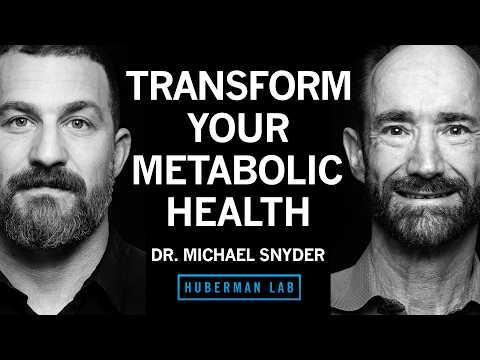
Stanford geneticist Dr. Michael Snyder explains how individual biology determines metabolic responses to interventions.
Summary
Dr. Michael Snyder, Stanford genetics professor, discusses how personalized medicine can optimize metabolic health and longevity. He explains why people respond differently to the same diet or exercise program based on their unique biology. Snyder covers how continuous glucose monitoring, genetic testing, and microbiome analysis can reveal individual metabolic patterns. The conversation explores practical applications of precision medicine for improving healthspan through tailored interventions rather than one-size-fits-all approaches.
Detailed Summary
Dr. Michael Snyder, a leading Stanford geneticist, explores how understanding individual biology can transform metabolic health and longevity outcomes. His research demonstrates that people respond dramatically differently to identical interventions due to genetic variations, microbiome differences, and metabolic profiles.
Snyder discusses practical tools for personalized health optimization, including continuous glucose monitors that reveal how specific foods affect blood sugar in real-time. He explains how genetic testing can identify predispositions to certain conditions and guide targeted interventions. The microbiome emerges as a crucial factor, with different bacterial populations influencing everything from nutrient absorption to inflammation levels.
The conversation covers real-world applications of precision medicine, showing how tailored approaches consistently outperform generic recommendations. Snyder presents case studies where personalized diet and exercise protocols produced superior results compared to standard guidelines. He emphasizes that what works for one person may be counterproductive for another.
Key insights include the importance of tracking multiple biomarkers simultaneously rather than relying on single measurements. Snyder advocates for combining wearable technology with laboratory testing to create comprehensive health profiles. This data-driven approach enables individuals to make informed decisions about diet, exercise, supplements, and lifestyle modifications based on their unique biological responses rather than population averages.
Key Findings
- Continuous glucose monitoring reveals personalized food responses that vary dramatically between individuals
- Genetic testing can identify optimal exercise types and dietary approaches for each person
- Microbiome composition significantly influences metabolic responses to interventions
- Multi-biomarker tracking provides more actionable insights than single measurements
- Personalized protocols consistently outperform one-size-fits-all health recommendations
Methodology
Discussion based on Snyder's longitudinal research studies tracking thousands of individuals using wearable devices, genetic sequencing, and microbiome analysis. Methods include continuous monitoring of multiple biomarkers and controlled intervention trials comparing personalized versus standard approaches.
Study Limitations
Discussion format limits depth of specific protocols. Personalized medicine approaches require significant time investment and may not be accessible to all populations due to cost considerations.
Enjoyed this summary?
Get the latest longevity research delivered to your inbox every week.